Start with the practical guide
This page describes the service and its limits. For the travel task, use the linked step-by-step guide. Open the travel guide.
Official-source review · October 29, 2026: Rechecked AREX Express and All-stop durations, displayed fares, ticket media, airport station locations and the current Express purchase guide. Overseas cards are explicitly listed for Express tickets; this does not establish foreign-card T-money top-up. No purchase, card authorization or journey was independently tested.
What AREX is for
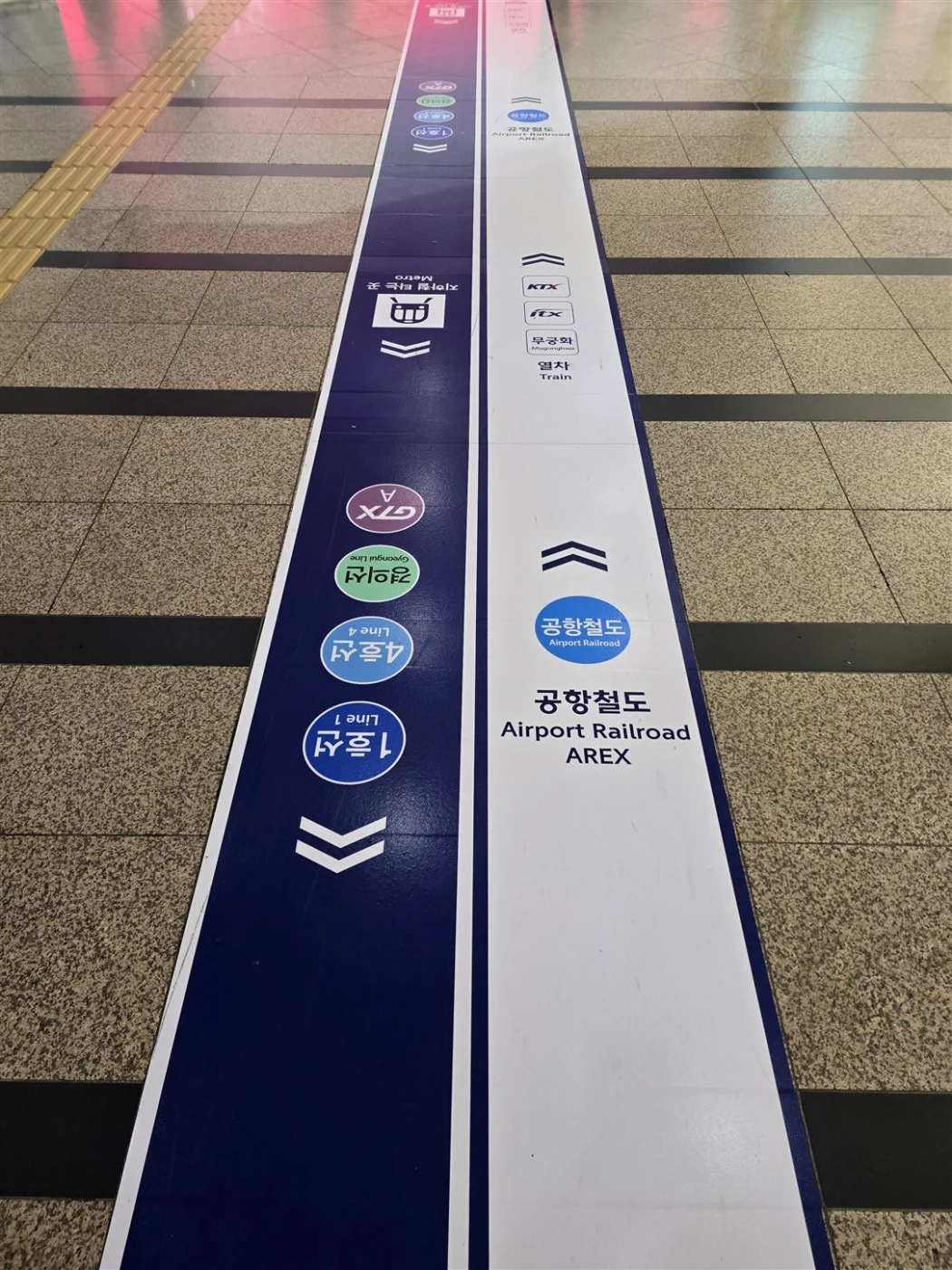
AREX, or Airport Railroad, connects Incheon Airport Terminal 1 and Terminal 2 with Seoul. The name covers two different train products: the reserved-seat Express Train, which runs nonstop between the airport terminals and Seoul Station, and the All-stop Train, which serves intermediate stations and connects with the Seoul metropolitan subway network.
Choose the product before paying. An Express ticket does not work like a T-money tap, and an All-stop fare does not include an Express seat. The best choice depends on the actual destination, arrival terminal, luggage, transfer count, departure time, and current fare—not simply which train is called “express.”
Compare Express and All-stop before paying
The Express Train is the simpler rail route when the destination or next transfer is at Seoul Station. AREX currently lists 43 minutes between Seoul Station and Terminal 1 and 51 minutes between Seoul Station and Terminal 2. It requires a separate ticket before boarding and uses assigned seats. The current official page displays an adult fare of KRW 13,000 while also showing higher normal fares, so treat the price as changeable and confirm the checkout total on the day of travel.
The All-stop Train serves intermediate stations including Gongdeok, Hongik University, Digital Media City, Magongnaru, Gimpo Airport, Gyeyang, and Geomam. AREX currently lists 59 minutes between Seoul Station and Terminal 1 and 66 minutes between Seoul Station and Terminal 2, with some trains taking an additional 2–6 minutes. It can be faster overall when the accommodation is near one of those stations or a direct subway transfer avoids backtracking from Seoul Station.
Neither published duration includes finding the airport station, buying or loading a ticket, waiting for the next departure, walking through Seoul Station, transferring, or reaching the final door. Compare complete door-to-door routes and leave a buffer for a missed departure or unfamiliar transfer.
Use the Express Train as a separate ticket product
At Incheon Airport, follow signs to the Transportation Center on basement level 1. The official airport guide places the Terminal 1 vending machines and information center there and the Terminal 2 ticket counter and information center on basement level 1. At Seoul Station, AREX lists the Express Train customer center on basement level 2. Confirm the terminal on the flight booking before following station signs.
Express Train: the official purchase guide lists overseas Visa, Mastercard, JCB, Diners Club, American Express and UnionPay cards. Check the selected purchase channel and issuer authorization; keep a cash or second-card fallback.
Do not assume an online account or advance booking is required for the staffed or machine route. Conversely, do not assume every online booking, discount, coupon, cancellation, change, or refund can be completed without an account or local verification. This record confirms the ordinary on-site traveler route only.
Use the All-stop Train with the correct fare medium
For the All-stop Train, use a compatible prepaid transit card such as T-money or buy a one-time transportation card at the station vending machine. A T-money card must already have enough Korean-won balance for the journey; the ordinary tourist top-up route is generally cash-based and is separate from buying an Express ticket.
The current adult transit-card fare table lists KRW 4,750 from Seoul Station to Terminal 1 and KRW 5,350 to Terminal 2. A one-time card adds KRW 100 to the ordinary fare and requires a KRW 500 deposit, refundable at the destination using the designated refund route. Fares depend on the origin, destination, passenger category, and current policy, so read the machine total rather than copying an old online price.
Keep each traveler’s fare medium separate and tap at both entry and exit. If the gate rejects the card, stop repeated taps and ask staff to check the balance, card type, entry record, and intended route. Do not enter the Express area with an All-stop fare or assume an airport-rail ticket automatically covers the next subway, bus, or KTX segment.
Protect the airport-to-city transfer
Check live departure information after landing. Train timetables and service notices change, and late-night arrivals can miss the final practical rail connection even when a generic route planner still shows AREX as an option. Use the official timetable or live train page instead of relying on a hard-coded last-train time.
Keep the exact Korean destination and accommodation address offline. Seoul Station is a large interchange, and an Express arrival can still require a long indoor walk, another subway fare, stairs or lifts, and a street-level transfer. When traveling with heavy luggage, compare the number of lifts and transfers with an airport limousine bus or official taxi—not only the train ride time.
The Seoul Station City Airport Terminal is an additional process, not a guaranteed Express benefit for every traveler. Airline eligibility, check-in deadlines, baggage acceptance, immigration procedures, operating hours, and service availability can change. Reopen the dedicated official instructions before planning to check baggage or complete departure formalities there.
Know the failure plan before entering
If the next Express departure creates a long wait or the destination is closer to an intermediate station, compare the All-stop route. If a transit card cannot be topped up or read, use a one-time All-stop card or a separately purchased Express ticket when that route fits. If rail service is ending, disrupted, inaccessible with the available luggage, or poorly aligned with the destination, move to an official airport limousine bus or taxi route.
For help, use the staffed AREX information center or the official customer line, 1599-7788. A phone number being published does not prove multilingual support at every hour. Show the terminal, train product, destination, and ticket screen rather than relying on an uncertain translation of “airport train.”
Korea Untangled did not independently buy, reserve, change, cancel, refund, load, tap, ride, transfer, use Wi-Fi, request assistance, or use the City Airport Terminal for this record. Current station signs, machine messages, staff instructions, train notices, airline rules, and official pages take priority.
When not to rely on AREX
Do not rely on AREX as the only plan when the flight lands near the end of service, the final destination requires difficult backtracking, the group cannot manage the station transfer with its luggage or mobility needs, a foreign-issued card is the only payment method, or an airport deadline leaves no recovery time.
Save one rail option and one non-rail fallback before travel. Recheck the correct terminal, live departure, complete fare, final transfer, and last practical connection after the flight status is known. That small check prevents most costly AREX mistakes: buying the wrong product, going to the wrong terminal, arriving at Seoul Station without a workable onward route, or discovering too late that the preferred payment method failed.
Official-source review · 2026-10-29
Rechecked AREX fares, journey times and separate ticket types, airport boarding areas, night-bus fares and taxi surcharges. Express remains KRW 13,000; adult All-stop transit-card fares from Seoul Station remain KRW 4,750 to T1 and KRW 5,350 to T2. Check the live departure and final destination.
www.airportrailroad.com · www.airportrailroad.com · www.airportrailroad.com · www.airportrailroad.com · www.airport.kr
Official documents were reviewed. No purchase, payment, booking, journey, app onboarding or physical-device test was performed.