Payments & Booking
How Much Cash Do You Need in Korea?
Most visitors can use cards for mainstream spending in Korea, but a small Korean-won reserve still protects transport loading, cash-only purchases, and one failed-card recovery.
Official-source checked Checked
The listed official sources were checked for this version of the guide.
- Next review
- Change rate
- Reviewed every 30 days
- Sources checked
- 5
Answer in 30 seconds
For a card-first trip in Seoul, KRW 50,000 to KRW 100,000 per adult is a practical editorial starting range for arrival cash, not an official rule or a full-trip budget. It is meant to cover a basic transport-card purchase and top-up, one modest cash payment, and a small recovery margin while you confirm that your cards work.
Carry more only when your actual plan needs it: cash-heavy markets, several transport-card top-ups, a rural destination, a late arrival, or a group whose backups depend on one person. Treat an airport taxi or another large emergency expense as a separate contingency; do not assume the starting range will cover it.
Korea is highly card-friendly, but “cards are widely accepted” does not mean every transit task, small merchant, machine, foreign card, or online checkout will work. Carry two cards if possible, keep the cash reserve separate, and replenish it from an official exchange counter or a compatible Global ATM only when needed.
Use the foreign-card Guide for the broad acceptance rules, the ATM Guide for a withdrawal, and the declined-card Guide when a live transaction fails.
Traveler compatibility
- Korean phone number
- Not required
- Foreign-issued card
- Partially supported
- Korean ID
- Not required
- English support
- Partial English
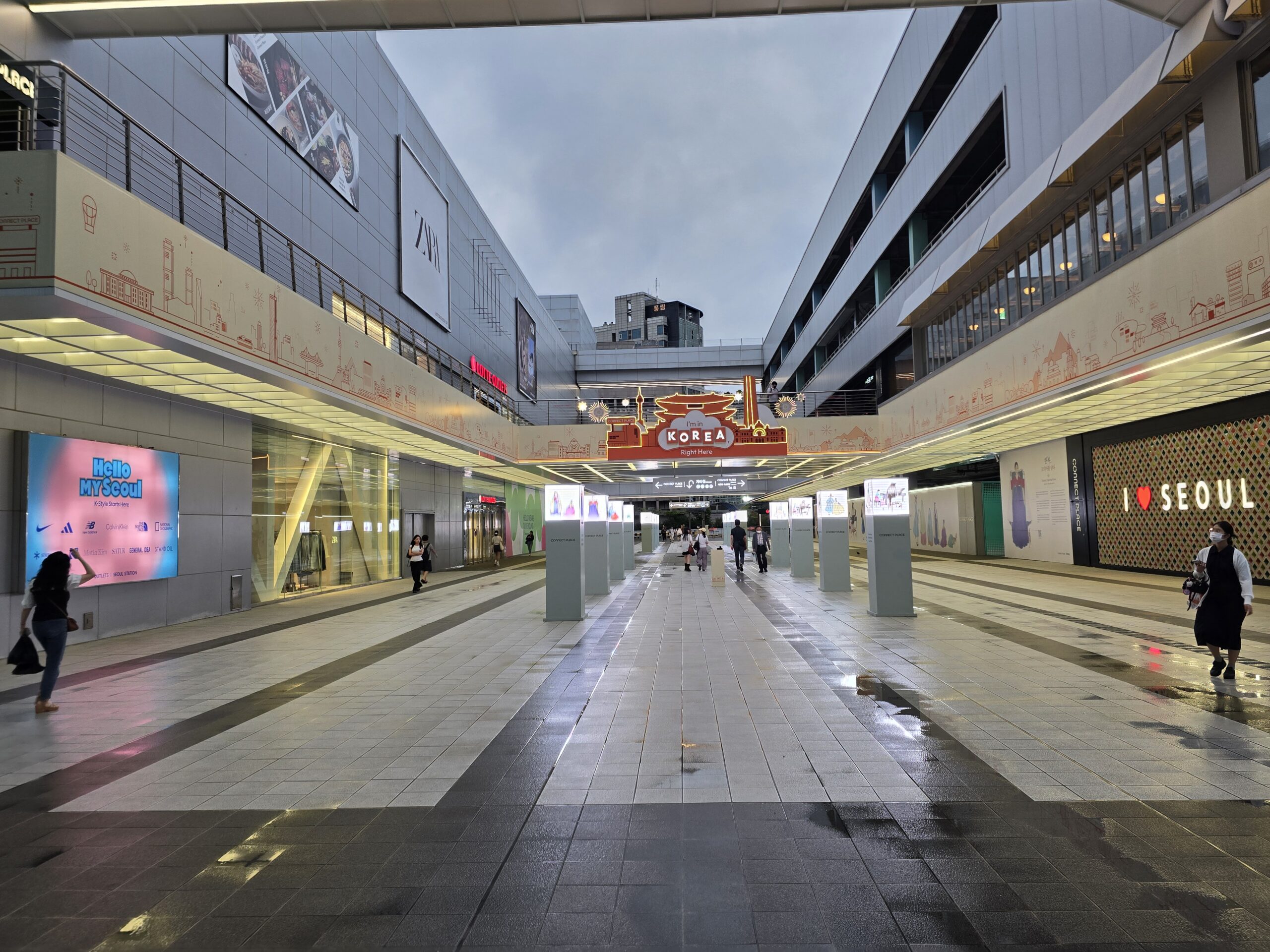
Choose your starting reserve
Swipe or scroll to see all columns.
| Trip pattern | Editorial starting point | Increase it when |
|---|---|---|
| Card-first solo or adult traveler in Seoul | KRW 50,000–100,000 per adult | You will buy and top up a transit card in cash, visit cash-heavy stalls, or have only one usable card |
| Family or small group | Calculate shared transport loading plus one cash meal and a margin | One person controls all cards, several travelers need separate transit cards, or children have different fare products |
| Late-night airport arrival | Keep the normal reserve, then plan the transfer separately | Rail or buses may end before you clear arrivals and an official taxi could become necessary |
| Rural, island, hiking, or festival day | Add cash after checking the actual destination | Small vendors, local buses, lockers, or temporary stalls may have narrower payment support |
These are planning examples, not official minimums. Your issuer, itinerary, accommodation, and risk tolerance matter more than a universal number.
Build the amount from real tasks
Use this simple formula:
- Add the amount needed to buy and initially load any physical transport cards.
- Add one modest cash meal or small-market purchase.
- Add one local transport or payment-recovery step.
- Add any known cash-only activity from an official operator page.
- Keep a separate plan for a large emergency such as a late-night airport taxi.
Round the first four items to a convenient amount. If the result is within KRW 50,000–100,000 per adult, the starting range already covers it. If it is higher, carry the calculated amount rather than copying someone else’s budget.
Where cash still solves a real problem
Basic transit-card purchase and top-up
The official Korea transportation guide states that a basic Tmoney card is purchased and charged with Korean-won cash. A foreign bank card is also not the normal direct-tap payment method at a standard subway gate or city-bus reader. Follow the Incheon Airport Tmoney Guide for the airport purchase sequence and the Tmoney, Climate Card, and WOWPASS comparison before choosing a different product.
Some designated machines and visitor products have separate international-card rules. Those exceptions do not turn every Tmoney reload machine into a foreign-card terminal.
Small or temporary merchants
Seoul’s official visitor information says cards are accepted at most stores, restaurants, hotels, and tourist destinations. That broad rule is useful, but a small stall, market purchase, temporary event booth, or machine can still be cash-only or fail with a particular foreign card. Ask before ordering when cash is low.
Payment recovery
Cash is most valuable when it prevents a single failed transaction from stopping the day. Use it for the immediate purchase, then diagnose the card later in a safe place. Do not spend the entire reserve on discretionary shopping before your backup cards and phone access have been tested.
Where cash is usually not the best default
Do not convert your entire hotel, shopping, and activity budget into banknotes only because one blog says Korea is cash-based. Large cash holdings can be lost, are harder to replace, and make it harder to dispute an incorrect charge.
Hotels, department stores, mainstream restaurants, attractions, and many other established merchants commonly support cards. A card also gives you a transaction record. The better setup is usually two cards from different issuers or networks where possible, a modest KRW reserve, and issuer-app access.
Step-by-step arrival setup
- Before departure, enable overseas in-person and ATM use according to each issuer’s current rules.
- Carry a primary card and a separately stored backup.
- Decide which airport or city cash source you will use, but do not assume every counter or ATM is open or supports your card.
- Obtain only the starting reserve you calculated.
- Buy and load the correct transport product through an official counter or machine.
- Test the primary card with a small ordinary merchant purchase.
- Keep enough cash untouched for one transport or meal recovery.
- Replenish only when the remaining itinerary still has a cash need.
If you are still sequencing immigration, baggage, data, money, and transport, use Your First 60 Minutes at Incheon Airport.
Exchange counter or ATM?
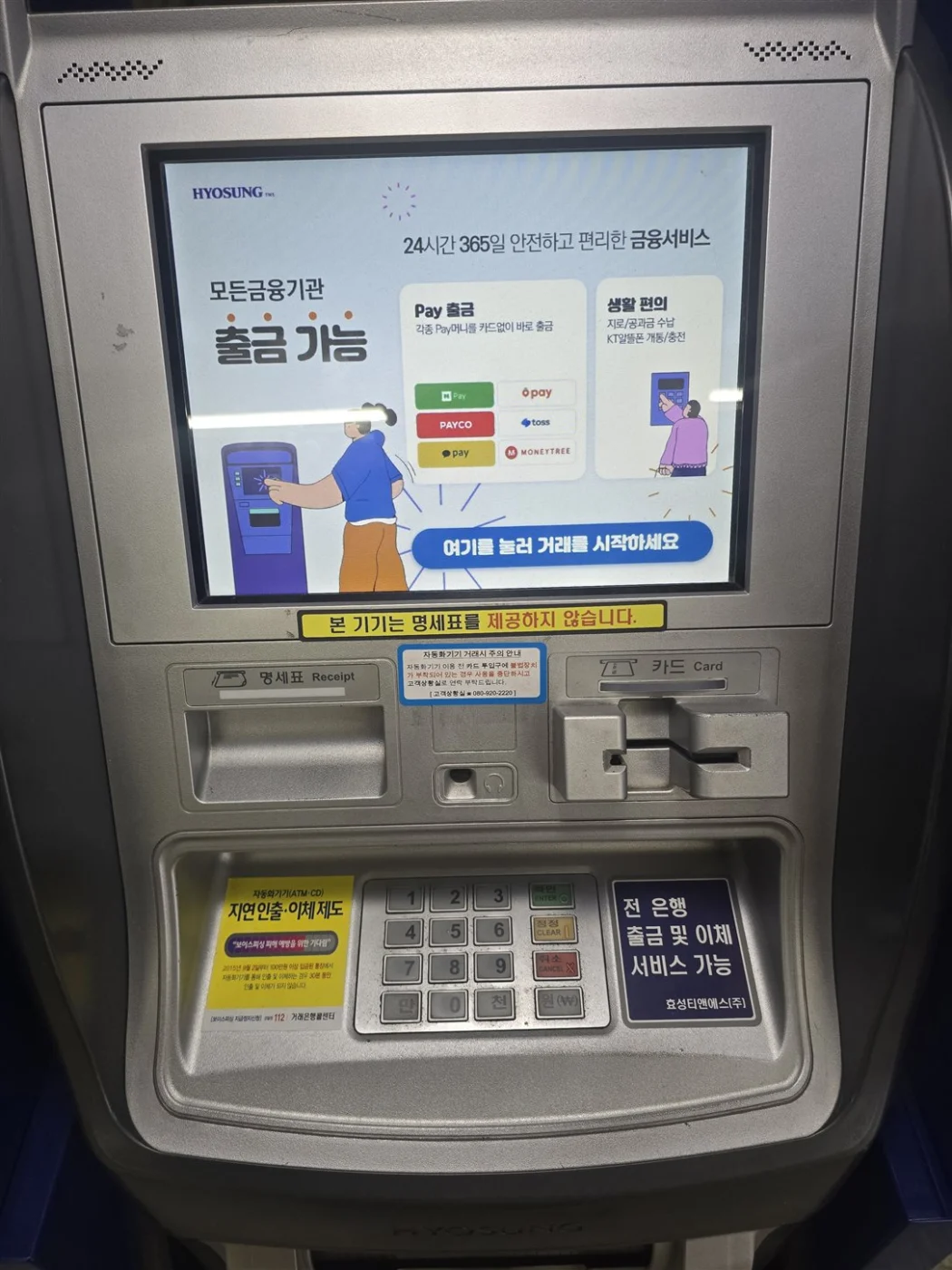
An official exchange counter gives a visible cash-for-cash rate and can be easier when you already carry supported foreign currency. A Global ATM can be available around the clock and avoids carrying large foreign banknotes, but approval, local ATM fees, issuer fees, cash-advance treatment, limits, and currency-conversion choices vary.
Compare the amount of KRW you will receive and all displayed fees. If an ATM offers a home-currency conversion, read the exchange rate and markup before accepting or declining it. The ATM withdrawal Guide explains the safe sequence.
If something goes wrong
Swipe or scroll to see all columns.
| Problem | Likely issue | Safest next action |
|---|---|---|
| You have too much foreign cash but little KRW | The first exchange amount was too small or the counter is closed | Use an official counter or compatible Global ATM; compare the displayed terms before continuing |
| A shop says cash only | The merchant or terminal does not support your card | Pay from the reserve if the price is clear, keep the receipt, and preserve recovery cash for transport |
| Your main card is declined | Issuer, terminal, authentication, network, or merchant rules may differ | Allow one clean retry, then switch card or cash and follow the declined-card Guide |
| An ATM rejects the card | The machine, network, issuer, account setting, or limit may not match | Stop repeated retries, try another official Global ATM with the correct logo, then contact the issuer |
| Only large KRW notes are available | The merchant or machine may not make change | Break a note with a normal staffed purchase; do not rely on an unofficial helper |
| The reserve is nearly gone | Spending exceeded the task-based plan | Recalculate remaining cash-only needs before withdrawing or exchanging more |
Cash safety
Split the reserve between daily access and a secure backup. Do not keep cards, all cash, passport, and phone in one wallet. Count cash discreetly, use staffed counters or bank-connected machines, and shield the PIN. Reject anyone who asks to handle your card, phone, PIN, passport image, or one-time code.
Keep exchange and ATM receipts until the account activity is correct. Never photograph or publish a full card number, security code, passport page, ATM receipt barcode, or authentication message.
Useful Korean phrases
현금만 되나요?— Is it cash only?카드로 결제할 수 있나요?— Can I pay by card?잔돈 있나요?— Do you have change?원화로 계산해 주세요.— Please charge or calculate it in Korean won.
Before you leave the airport
- I have two independent payment methods where possible.
- I calculated cash from actual tasks, not a whole-trip guess.
- I kept one transport or meal recovery amount untouched.
- I know how to obtain more KRW from an official source.
- I planned a late-night airport transfer separately if it may be needed.
Official sources
| Institution | Official page | What it was used to verify |
|---|---|---|
| Seoul Metropolitan Government | Currency Exchange | Card acceptance context, Korean currency, and official exchange channels |
| Seoul Tourism Organization | Money | Global ATM recognition, foreign-language menus, exchange booths, and fee cautions |
| Korea Tourism Organization | Korea Transportation Guide | Basic Tmoney cash purchase and top-up boundary |
| Incheon International Airport Corporation | Financial facilities | Current airport ATM, bank, and exchange-counter availability by location and hours |
| Visa | Dynamic Currency Conversion | Required DCC choice and displayed exchange information |
Official pages and operating hours can change. Sources were checked on September 2, 2026. The KRW 50,000–100,000 range is Korea Untangled’s editorial planning example, not a government, bank, or card-network requirement, and no exchange, withdrawal, card payment, Tmoney load, or cash purchase was independently tested.
Change log
- 2026-09-10 — Added contextual photographs and instructional screenshots with source and privacy notes. This media update does not change the information-verification date or field-test status.
- 2026-09-02 — Plan cash for transport loading, small purchases and one backup journey; the KRW 50,000–100,000 example is an editorial starting point.
- 2026-09-02 — Verification scope: No exchange, withdrawal, card payment, transport-card load, cash purchase, or late-night transfer was independently tested.